InShipment*
SaaS solution for logistics management
About the client
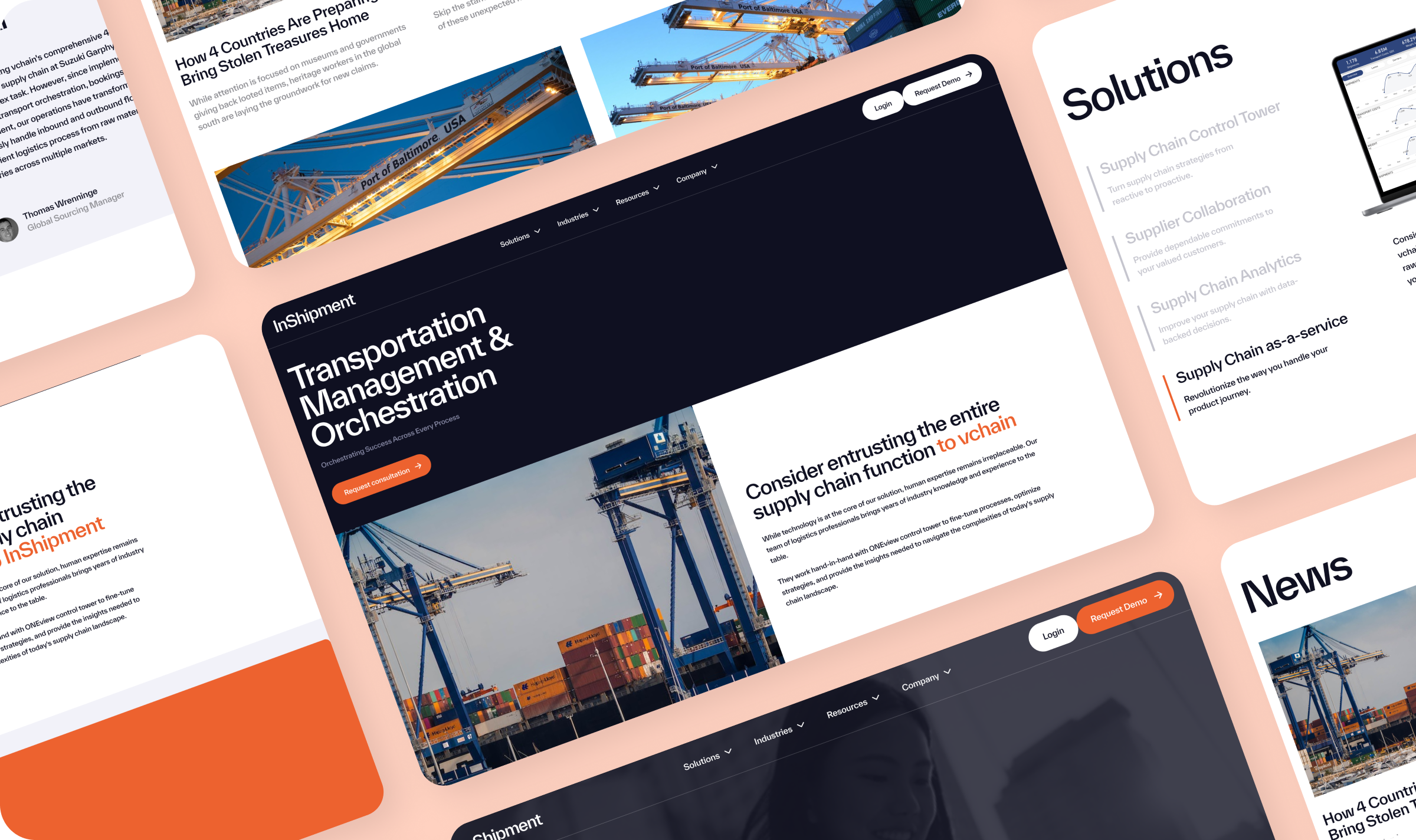
InShipment* is a Swedish B2B platform for managing international logistics. It allows companies to centrally control shipments, book transportation, track cargo, calculate costs and CO₂ emissions, and generate customs documents.
The platform's clients are international manufacturers and distributors who need to see all processes in one window and respond promptly to deviations from the plan. Integrations include major carriers (DHL, UPS, DB Schenker) and manufacturers (Texas Instruments, Arrow, Avnet, Mouser, etc.)
Task
We needed to transform the platform from a technically unstable MVP into a mature product ready for commercial scaling. Beyond improving architecture, we also had to rethink the product value: the initial solution only partially covered tracking and didn't solve key logistics tasks. The platform didn't allow booking transportation, working with documents, calculating costs, or integrating with customs. We started by rethinking the MVP: identified key functions without which clients saw no value and wouldn't switch to the platform.
Client's problems
Low operational reliability limited growth
InShipment was in early MVP stage and demonstrated unstable performance. But the main problem was the lack of basic functionality: the platform didn't allow booking transportation, preparing accompanying documents, or integrating with customs—resulting in a product that didn't solve client needs and wasn't used in business.
High costs for supporting manual processes reduced profitability
Due to the absence of stable architecture and accumulated technical debt, most of the team was busy not developing the product but fixing failures and manually supporting current processes. This reduced team throughput and hindered quick responses to changes in the logistics industry—including implementing new features requested by clients.
Limited value for end users hindered engagement
Platform functionality was distributed across external services, and the interface didn't account for real logistician workflows. Users faced slow loading, confusing navigation, and need to manually duplicate actions. All this reduced user satisfaction and increased churn.
Limited commercial model hindered monetization
Without cost calculation, tracking, automated document flow, and proper analytics, InShipment couldn't compete with more mature solutions. It was dependent on third-party tools and couldn't be sold as a standalone product, hindering revenue and business growth.
Insufficient flexibility slowed adaptation to market demands
Technical debt and unstable architecture led to high maintenance costs and limited speed of new feature implementation. This reduced the team's ability to adapt to changing logistics market requirements—such as ESG reporting, supply control, and document flow digitalization.
Challenges
we faced
Working on a live product with limited resources
The service was launched and used daily—every minute of downtime could lead to data and lead loss. All changes had to be implemented carefully, gradually, and without system stoppage. This complicated any edits and required flawless preparation.
Legacy code and non-obvious dependencies
The platform was already actively used by the business: sales were ongoing, leads came daily. Yet resources were limited while reliability requirements were high. Every release had to be implemented carefully without system stoppage to avoid downtime or data loss.
Integrations with external services—with no room for error
All contact data had to accurately reach CRM and other systems. Integration failure meant lost customers. This imposed high requirements for code quality, data processing logic, and robustness of all exchange points.
Solution
Eliminated technical debt and stabilized the platform
After detailed code and architecture audit, we identified key bottlenecks and decided to gradually rework about 90% of functionality. Conducted technical sessions and reviews with the client to correctly set priorities. Implemented automated testing and CI/CD, which improved stability and minimized failures.
Improved performance of key business scenarios
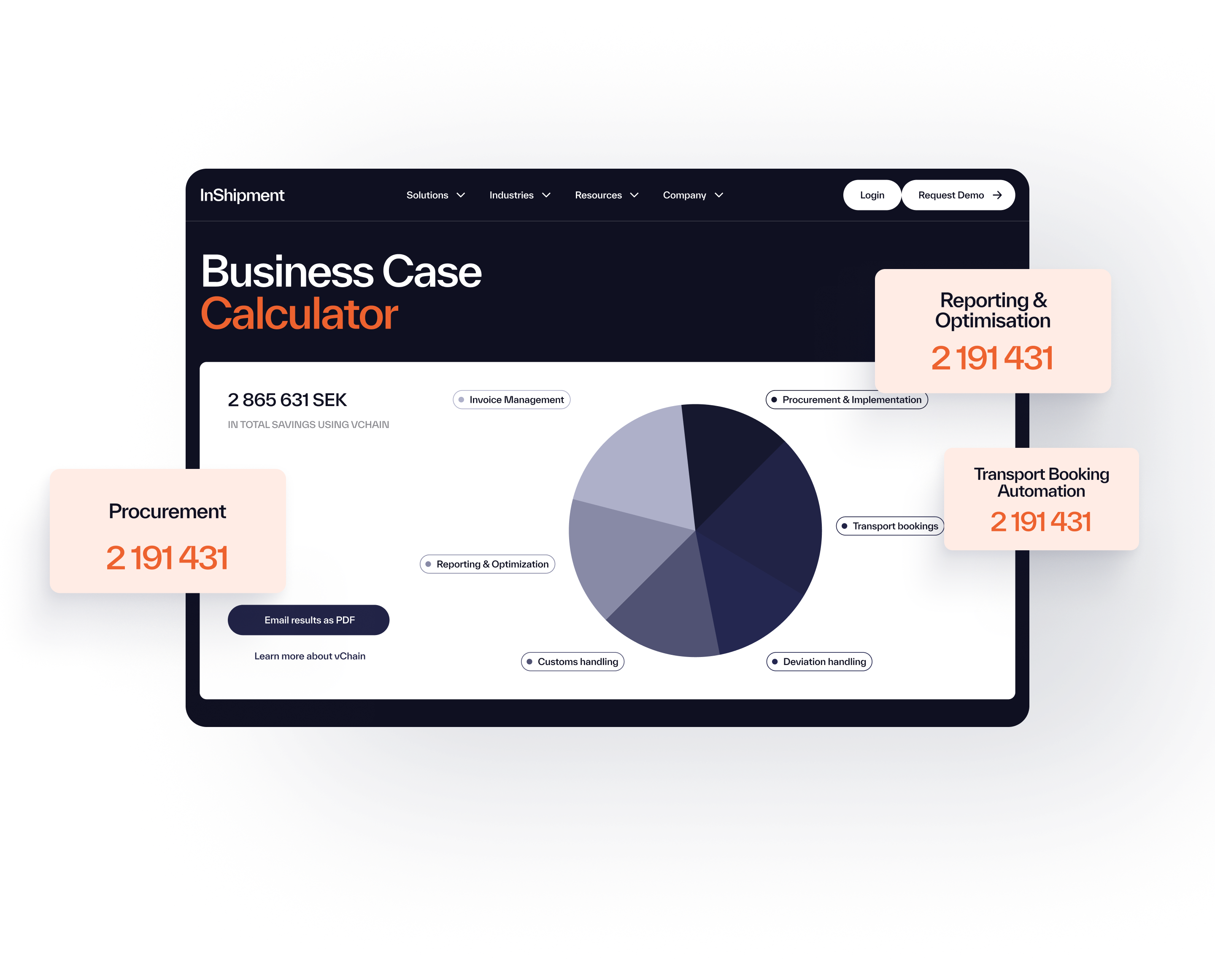
Using analytics and user feedback, we identified the most resource-intensive processes—for example, order import taking over a minute. The module was completely reworked and now works in 3–5 seconds. Implemented transportation cost calculation considering tariffs and supply chains, plus integration with CO₂ emission calculator via Proxio service, adding important functionality for clients.
Expanded platform capabilities and user scenarios
Collaboratively developed an automated monitoring and alert system with the client's team: delays, route changes, and customs issues are now captured and promptly communicated to all stakeholders. Users gained flexible notification settings with custom templates and recipient lists.
Connected external services and reduced team workload
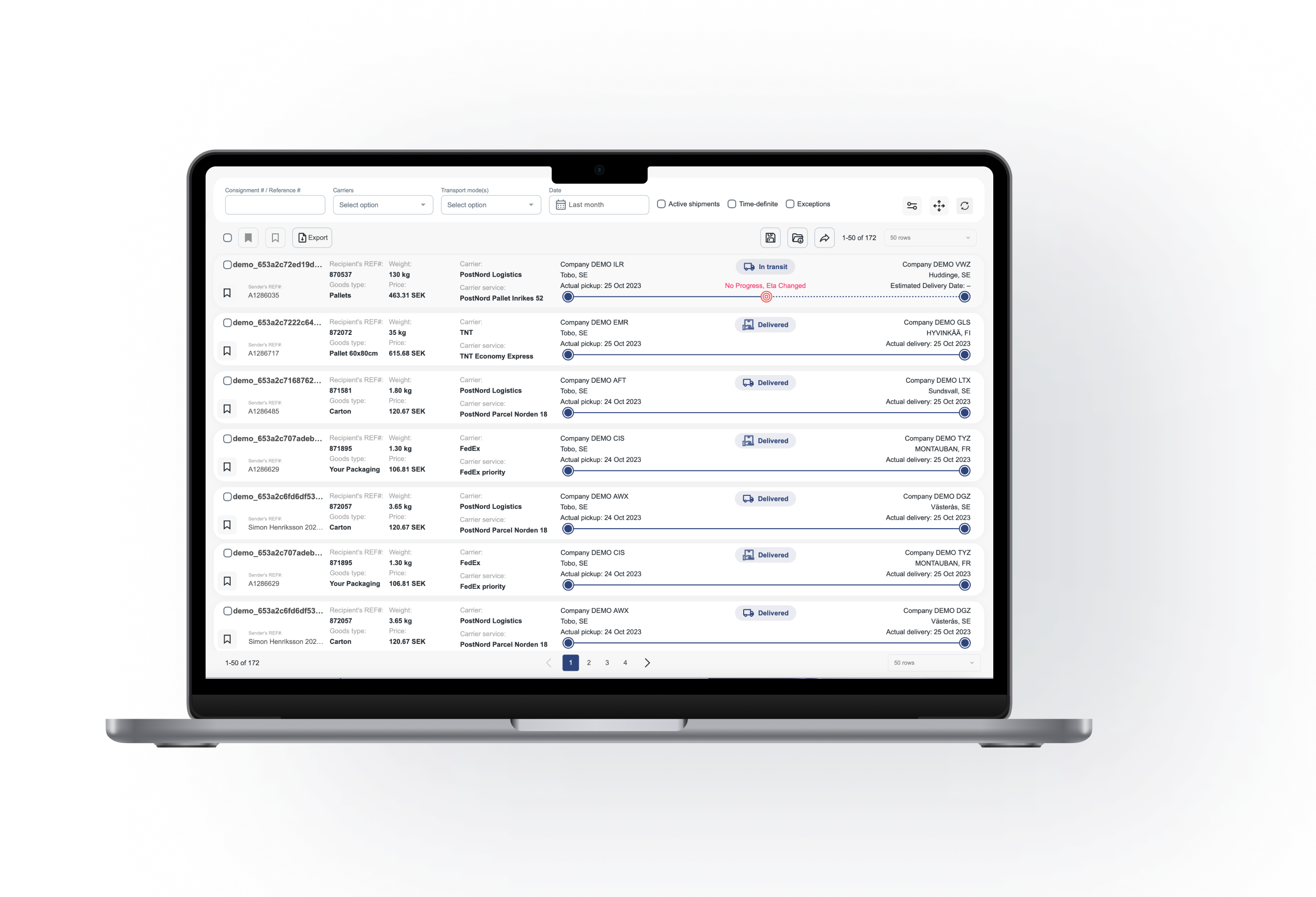
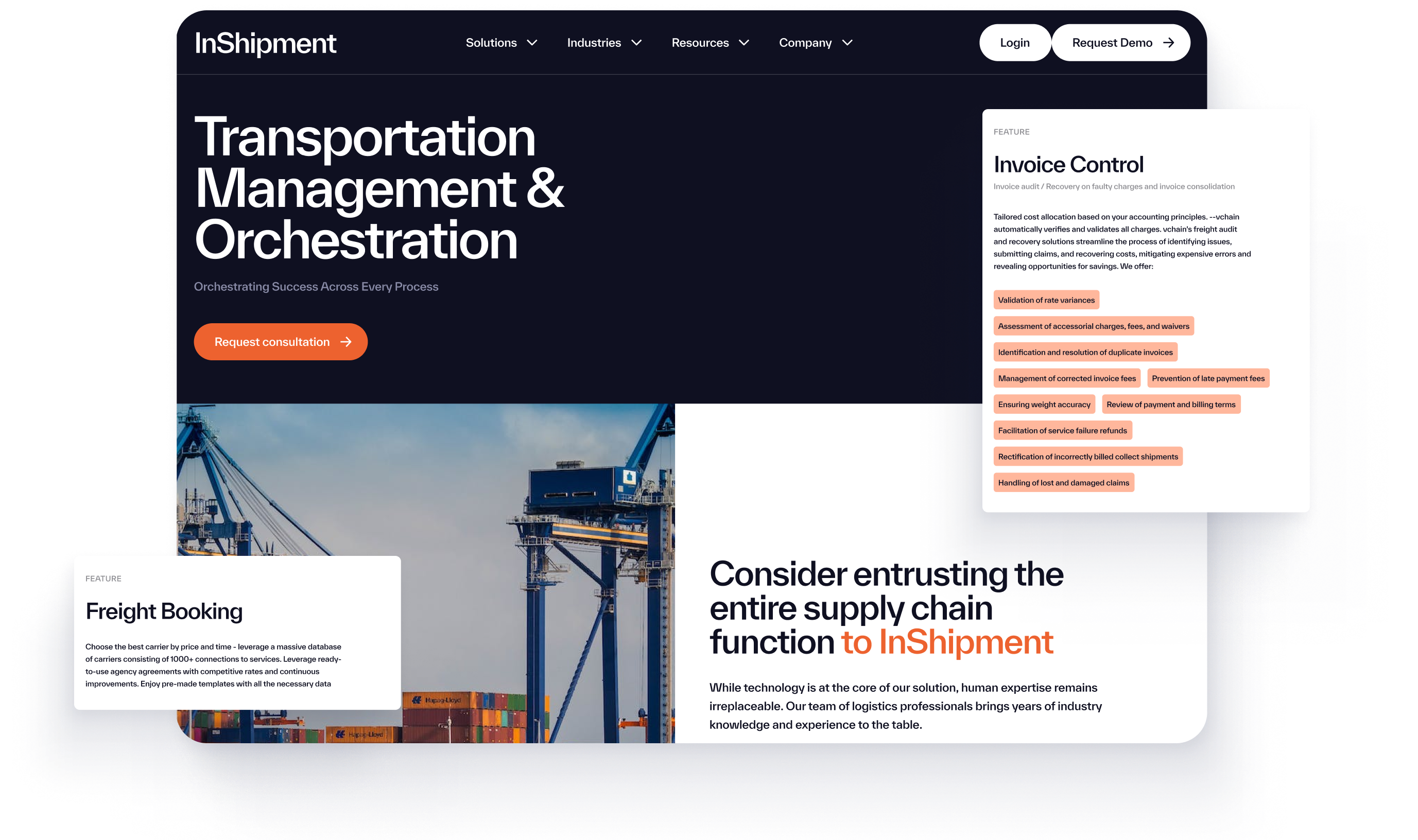
Added booking capabilities and interaction with major logistics providers—Unifaun, UPS, Schenker. This stage required thorough API analysis and close cooperation with carriers for adaptation and integration testing. Implementing these features significantly simplified transportation selection and booking, reducing operator workload.
Updated interface and increased user satisfaction
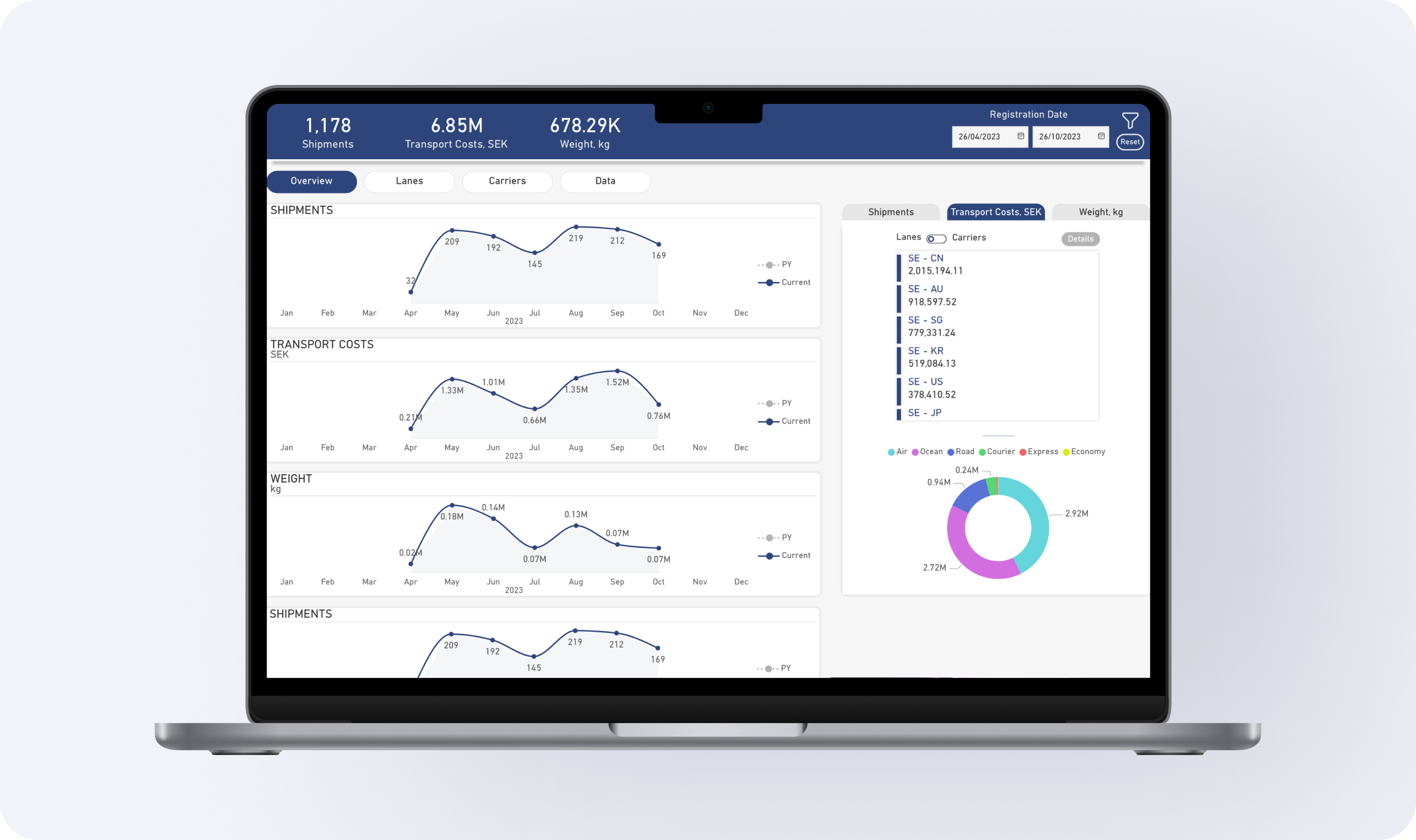
To improve usability, conducted in-depth interviews and collected end-user feedback. Based on data, simplified interface, redesigned navigation, and moved key functions to sidebar. Power BI integration made analytics transparent and automated report preparation, reducing analyst workload.
Result
Completely reworked platform functionality increased user satisfaction (by client's internal metric—NPS increased by 23 points).
Booking import accelerated from 60+ seconds to 3–5 seconds.
Fully automated carrier selection and booking, saving up to 2 hours of manager work.
Power BI integration saved up to 8 hours weekly on analytics and reporting.
Number of support requests decreased by 5.4 times.
Platform transitioned to commercial status—now sold as a standalone product or part of service packages.
* project is under NDA, so the real name is replaced